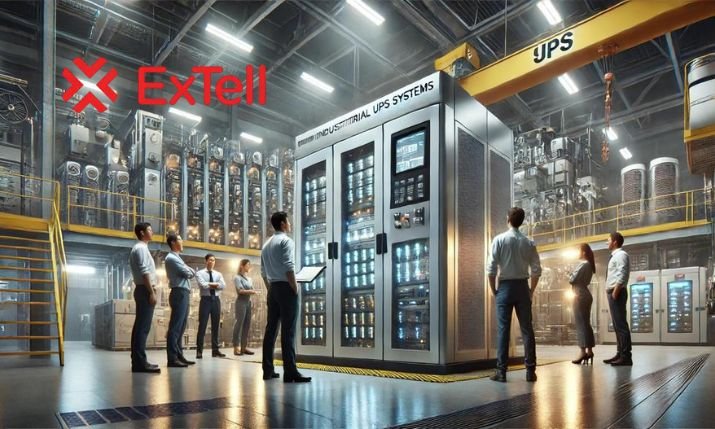

How to Choose the Right UPS System for a Data Center: A Complete Guide
A data center depends on continuous power to keep servers, networking equipment, storage systems, security devices, and critical applications running. Even a short power interruption can cause downtime, data loss, equipment disruption, or service interruptions.
This is why choosing the right UPS system for a data center is an important part of power infrastructure planning. A UPS, or Uninterruptible Power Supply, provides backup power during interruptions and can also help protect connected equipment from certain power-quality problems.
But how do you choose the right UPS for a data center?
The answer depends on several factors, including load capacity, runtime, redundancy, scalability, battery requirements, monitoring, efficiency, and the criticality of the equipment being protected.
What Is a UPS System for a Data Center?
A data center UPS is a power protection system designed to provide continuous power to critical IT and infrastructure equipment when the main electrical supply is interrupted or affected.
A UPS can support equipment such as:
- Servers and storage systems
- Network switches and routers
- Telecom equipment
- Security and access-control systems
- Data center monitoring systems
- Critical cooling and facility systems, depending on configuration
Unlike a basic backup power source, a UPS is designed to provide immediate power continuity while also supporting power-quality management.
Why Is UPS Important for Data Centers?
Data centers operate around the clock, so power availability is a critical consideration.
A sudden power failure can interrupt servers, networking systems, applications, and communication services. Repeated voltage fluctuations or other electrical disturbances can also create operational challenges.
A properly planned UPS system can help:
- Maintain power during short interruptions
- Protect critical IT equipment from certain electrical disturbances
- Provide time for controlled shutdowns when required
- Support operation until a generator or other backup source is available
- Improve overall power protection planning
- Reduce the impact of unexpected power events
The UPS should therefore be considered as part of a broader data center power protection strategy.
How Do You Calculate the Right UPS Capacity?
UPS capacity is one of the first factors to evaluate.
Start by identifying every critical load that the UPS will support. Record the power requirements of servers, storage systems, networking equipment, and other connected devices.
The calculation should consider:
- Current electrical load
- Expected peak load
- Future equipment additions
- UPS efficiency and operating limits
- Required capacity margin
Avoid selecting a UPS based only on the current load. A data center may expand over time, increasing the demand for power.
Working with qualified electrical and power-system professionals can help ensure that the selected capacity matches the actual installation requirements.
How Much UPS Runtime Does a Data Center Need?
UPS runtime refers to how long the UPS can provide backup power from its batteries under a specific load.
There is no single runtime that is correct for every data center.
The required runtime depends on the business continuity strategy and the role of other backup systems, such as generators.
For example, a facility may require enough battery runtime to:
- Bridge a short power interruption
- Allow a generator to start
- Support critical systems during a transition
- Provide time for controlled shutdown procedures
Battery capacity should therefore be planned according to the required load, runtime, battery technology, operating conditions, and manufacturer specifications.
What Is UPS Redundancy and Why Does It Matter?
Redundancy is an important consideration in critical data center environments.
A single UPS configuration can create dependency on one system. Depending on the facility design and availability requirements, data centers may use redundant UPS architectures to reduce dependency on a single power component.
Common approaches can include configurations where additional UPS capacity is available to support the load if one unit is unavailable.
The appropriate architecture depends on factors such as:
- Criticality of the data center
- Required availability
- Existing electrical infrastructure
- Maintenance requirements
- Budget
- Future expansion plans
UPS redundancy should be designed as part of the complete electrical infrastructure rather than treated as an isolated equipment decision.
Should You Choose an Online UPS for a Data Center?
Online double-conversion UPS systems are commonly considered for applications where continuous power conditioning and high levels of power protection are important.
In an online double-conversion design, incoming AC power is converted and processed before being supplied to the connected load. During a power interruption, the battery system supports the UPS output without requiring the load to wait for a traditional transfer process.
When evaluating an online UPS, consider:
- Required capacity
- Efficiency
- Battery configuration
- Load characteristics
- Generator compatibility
- Monitoring and communication options
- Maintenance requirements
- Manufacturer support
The final selection should be based on the specific electrical and operational requirements of the data center.
How Important Is Battery Configuration?
Batteries are a major part of any UPS system.
The battery configuration affects backup runtime, maintenance planning, physical space requirements, and lifecycle management.
When choosing a data center UPS, consider:
- Required backup runtime
- Battery capacity
- Battery installation space
- Operating temperature
- Battery monitoring
- Replacement planning
- Maintenance requirements
Battery cabinets may also be required for installations with larger backup requirements.
Proper battery planning helps create a more predictable and maintainable UPS infrastructure.
Why Is UPS Monitoring Important?
Modern data centers require visibility into their power infrastructure.
UPS monitoring can provide information about system status, load levels, battery condition, alarms, input and output conditions, and other operational parameters, depending on the UPS model and monitoring configuration.
Remote monitoring can help facility teams identify potential issues earlier and improve maintenance planning.
For critical environments, UPS monitoring should be considered alongside network monitoring, facility management, and other infrastructure-management systems.
How Should You Plan for Future Data Center Growth?
Data center requirements can change as organizations add servers, storage, networking equipment, applications, and other infrastructure.
A UPS that meets today’s requirements may not automatically meet tomorrow’s.
Before selecting a system, consider:
- Planned IT expansion
- Additional rack capacity
- Future power demand
- Battery expansion
- Modular or scalable UPS options
- Electrical distribution capacity
- Cooling requirements
Planning for future growth can reduce the need for major infrastructure changes later.
What Other Factors Should You Consider?
UPS capacity is only one part of the decision.
A complete evaluation should also consider:
Efficiency
UPS efficiency affects energy consumption and operating costs. Compare the expected operating conditions and manufacturer specifications.
Generator Compatibility
If a generator is part of the site’s backup strategy, confirm compatibility between the generator, UPS, batteries, and electrical distribution system.
Maintenance and Service
Consider installation, commissioning, preventive maintenance, battery replacement, technical support, and lifecycle requirements.
Physical Space
The UPS, batteries, battery cabinets, and related equipment require appropriate installation space and environmental conditions.
Scalability
Choose a system that can support the organization’s expected growth where practical.
How Does ExTell Systems Support Data Center Power Infrastructure?
ExTell Systems provides Power Backup Solutions and ICT products designed around the requirements of modern infrastructure.
Its solution portfolio includes Power Electronics, Batteries, Battery Cabinets, Network Racks, Structured Cabling, Accessories, and Greenfield Solutions.
For a data center, power protection should be planned together with the broader infrastructure. UPS systems, batteries, power electronics, networking infrastructure, and supporting equipment all play a role in creating a reliable operating environment.
ExTell Systems works across international markets, with office locations in the UAE, Bahrain, USA, and India, providing IT networking products and energy solutions focused on practical market requirements.
Frequently Asked Questions
1. What is the best UPS system for a data center?
The appropriate UPS depends on the data center’s load, runtime, redundancy, scalability, battery requirements, monitoring needs, and availability objectives. A qualified assessment should be completed before selecting the system.
2. How do I calculate UPS capacity for a data center?
Calculate the total critical electrical load, consider peak demand and planned expansion, and maintain an appropriate capacity margin based on the system design and manufacturer specifications.
3. How long should a data center UPS provide backup power?
There is no universal runtime requirement. Runtime should be based on the facility’s continuity strategy, critical loads, shutdown requirements, and the role of generators or other backup systems.
4. Is an online UPS suitable for data centers?
Online double-conversion UPS systems can be suitable for critical applications requiring continuous power protection and power conditioning. The final choice should depend on the site’s electrical and operational requirements.
5. Why is UPS monitoring important in a data center?
UPS monitoring provides visibility into system status, load, battery condition, alarms, and other parameters. It can support maintenance planning and help facility teams respond to power-system issues.
Explore More from ExTell Systems
https://extellsystems.com/contact
https://extellsystems.com/about
https://extellsystems.com/support
Sales mail -: sales@extellsystems.com
Choose the Right Data Center UPS Strategy
Choosing a UPS system is not simply about selecting a kVA rating. A reliable data center power strategy should consider capacity, runtime, redundancy, batteries, monitoring, scalability, efficiency, maintenance, and future expansion.
Whether you are building a new facility, upgrading an existing data center, or planning additional IT capacity, the right power protection strategy can help support critical operations.
Explore ExTell Systems’ power backup and ICT solutions to understand how UPS, batteries, power electronics, network infrastructure, and related systems can fit into your data center requirements.
Contact ExTell Systems today to discuss your data center power protection needs and develop a UPS strategy aligned with your critical infrastructure.