Beyond Infrastructure: Building Reliable, Scalable and Efficient Business Operations
Modern businesses depend on infrastructure every minute of the day. Servers process information, networks connect people, and power systems keep critical equipment running. When everything works properly, infrastructure often goes unnoticed. However, even a small failure can affect business operations, productivity, customer experience, and revenue.
For a data center, an unexpected power interruption can bring workloads offline. In banking, system downtime can delay transactions and affect customer confidence. In manufacturing, an interrupted production line can lead to operational losses. For telecom companies, network failures can disconnect thousands of users.
These challenges highlight an important business requirement: infrastructure must be reliable, scalable, and efficient enough to support both current operations and future growth.
Building such infrastructure requires more than purchasing individual products. Businesses need a well-planned combination of power backup, connectivity, networking equipment, and integrated infrastructure solutions.
ExTell Systems supports these requirements through power backup solutions, ICT products, and infrastructure solutions designed for mission-critical business environments.
Why Reliable Infrastructure Matters for Modern Businesses
Business infrastructure includes the systems, equipment, and technologies that support daily operations. It covers power distribution, backup systems, data center equipment, network connectivity, and communication infrastructure.
When these systems are not properly planned, businesses may experience several challenges:
- Unexpected power interruptions and equipment shutdowns.
- Network downtime affecting communication and data access.
- Limited infrastructure capacity as business operations grow.
- Higher maintenance requirements and operational expenses.
- Difficulty integrating new technologies with existing systems.
Reliable infrastructure helps reduce these risks. It allows businesses to maintain operational continuity, protect critical equipment, and support consistent service delivery.
For organizations that operate around the clock, infrastructure reliability is not simply a technical requirement. It is an essential part of business performance.
1. Modular Power Solutions for Business Continuity
Power interruptions can affect servers, networking equipment, industrial machines, and other essential systems. A reliable power backup strategy helps businesses protect equipment and maintain operations during unexpected power failures.
Traditional power systems may become difficult to expand when business requirements increase. This is where modular UPS (Uninterruptible Power Supply) solutions offer an advantage.
A modular UPS system uses multiple power modules that can work together to deliver the required capacity. Businesses can increase capacity by adding modules instead of replacing the complete system.
Key benefits include:
- Flexible scalability: Add power modules as electricity requirements increase.
- Reduced maintenance downtime: Hot-swappable modules allow supported maintenance activities without shutting down the entire system.
- Redundancy: N+1 and N+N configurations provide additional protection against individual module failures.
- Space efficiency: High power density helps businesses use available equipment space effectively.
- Energy efficiency: Modern UPS systems are designed to reduce unnecessary power losses.
ExTell Systems provides modular UPS solutions for data centers, telecom networks, banking infrastructure, and industrial environments. These solutions help organizations plan power capacity according to present requirements while keeping future expansion in mind. ExTell Systems+1
2. Smart Connectivity and Network Infrastructure
Reliable power is only one part of business infrastructure. Organizations also need strong network connectivity to transfer information, connect devices, and support communication.
Poorly designed network infrastructure can create slow connections, communication failures, and difficulties when adding new users or equipment.
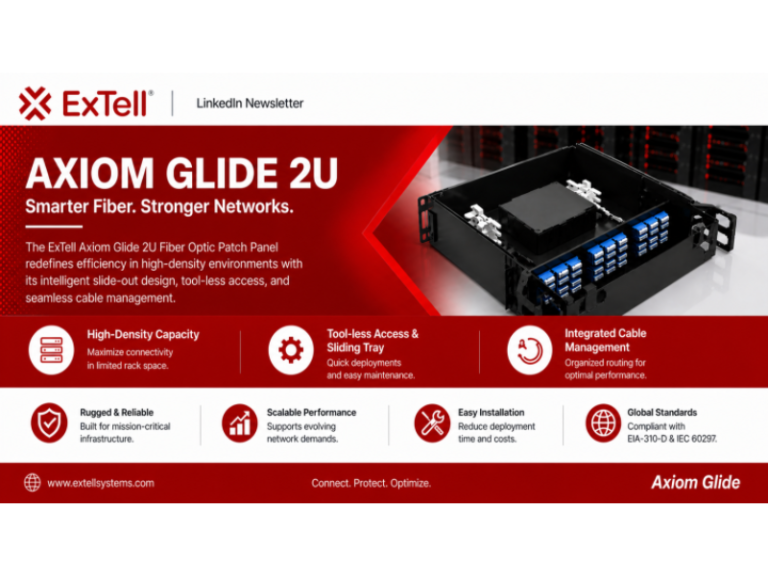
Structured cabling provides an organized foundation for network communication. It connects different parts of a building or facility through a planned cabling system.
Important components include:
- Fiber optic cables: Support high-speed data transmission over longer distances.
- Copper network cables: Connect computers, switches, servers, and other network devices.
- Network racks: Organize and protect networking equipment.
- Fiber accessories: Support cable termination, distribution, and management.
- Structured cabling systems: Create an organized network layout that is easier to maintain and expand.
For data centers and large enterprises, properly planned connectivity reduces cable management challenges and supports future network upgrades.
ExTell Systems offers networking products, fiber solutions, and structured cabling infrastructure to support enterprise connectivity requirements.
3. Resilient Infrastructure for Different Industries
Every industry has different operational requirements. A power backup system designed for a small office may not be suitable for a large manufacturing facility or data center.
Infrastructure planning should consider the environment, equipment load, operating hours, expected growth, and the impact of downtime.
Here is how different industries can benefit from integrated infrastructure planning.
Data Centers
Data centers require continuous power and reliable connectivity to support servers, storage systems, and cloud workloads. Modular UPS systems, battery backup, network racks, and structured cabling help create a dependable operating environment.
Banking and Financial Services
Banks depend on digital platforms, transaction systems, communication networks, and data security. Reliable power backup and organized network infrastructure help maintain service continuity and reduce operational interruptions.
Telecom Industry
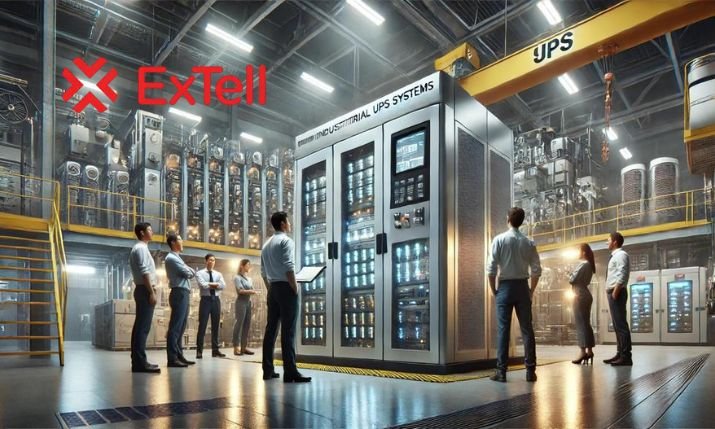
Telecom networks support communication across cities, businesses, and remote locations. Industrial UPS systems, battery solutions, and fiber connectivity help support network availability across different deployment environments.
Manufacturing and Industrial Facilities
Manufacturing operations depend on automation equipment, control systems, monitoring devices, and uninterrupted production processes. Industrial-grade power backup and reliable connectivity help protect operations from unexpected interruptions.
Healthcare and Government
Hospitals and government organizations depend on reliable digital systems, communication networks, and essential equipment. Infrastructure planning helps support continuous access to critical services.
4. Why Businesses Should Choose Scalable Infrastructure
Business requirements rarely remain the same for long. Companies add employees, expand facilities, introduce new applications, and increase their data processing needs.
Infrastructure that cannot support this growth may require expensive replacement or major redesign.
Scalable infrastructure helps businesses prepare for changing requirements without rebuilding everything.
Before selecting an infrastructure solution, organizations should evaluate:
- Current capacity: Understand existing power consumption, network requirements, and equipment needs.
- Future expansion: Estimate how infrastructure requirements may change over the next few years.
- Redundancy requirements: Identify systems that need additional protection against equipment failure.
- Space availability: Consider rack space, equipment placement, ventilation, and cable management.
- Maintenance planning: Select equipment that supports practical servicing and long-term operation.
- Integration: Ensure new equipment can work with existing systems wherever technically appropriate.
A planned approach helps reduce unnecessary complexity and makes infrastructure easier to manage over time.
5. How ExTell Systems Supports Integrated Infrastructure Planning
Businesses often purchase UPS systems, batteries, networking equipment, and connectivity products from different suppliers. Without proper planning, this can create compatibility issues, supply chain challenges, and additional coordination work.
ExTell Systems focuses on power backup solutions and ICT infrastructure to help businesses address these requirements through a coordinated product and solution ecosystem.
Its portfolio includes:
- Modular and industrial UPS solutions.
- Power electronics and battery systems.
- Fiber optic cables and accessories.
- Networking products and network racks.
- Enterprise structured cabling solutions.
- Infrastructure solutions for data centers and telecom networks.
ExTell Systems works with businesses across different markets, with offices in the USA, UAE, and India. Its approach emphasizes reliability, flexibility, interoperability, and practical infrastructure requirements. ExTell Systems+1
By considering power and connectivity together, organizations can build infrastructure that is easier to manage, maintain, and expand.
6. The Future of Business Infrastructure
Business infrastructure will continue to evolve as cloud computing, artificial intelligence, automation, and digital communication become more important.
These developments will increase demand for reliable power, higher network capacity, efficient equipment management, and flexible infrastructure designs.
Businesses should therefore move beyond short-term equipment purchasing decisions and focus on long-term infrastructure planning.
The goal is not simply to install more equipment. It is to create an environment where power systems, connectivity, and supporting technologies work together efficiently.
Organizations that invest in well-planned infrastructure today will be better prepared to manage future operational demands.
Frequently Asked Questions
1. What is business infrastructure?
Business infrastructure includes the power systems, networking equipment, connectivity solutions, servers, and supporting technologies required to operate an organization efficiently.
2. Why is reliable power backup important for businesses?
Reliable power backup protects critical equipment from unexpected power interruptions. It helps maintain operations, reduce downtime, and protect important business systems.
3. What is a modular UPS system?
A modular UPS is an uninterruptible power supply system that uses multiple power modules. Businesses can increase capacity by adding modules as their power requirements grow.
4. How does structured cabling improve network infrastructure?
Structured cabling organizes network connections through a planned cabling system. It improves cable management, simplifies maintenance, and supports future network expansion.
5. How can businesses build scalable IT infrastructure?
Businesses should evaluate current requirements, estimate future demand, select expandable equipment, plan redundancy, and ensure compatibility between power and networking systems.
Build Infrastructure That Is Ready for Tomorrow
Reliable infrastructure is the foundation of uninterrupted business operations. From modular UPS systems and battery solutions to fiber connectivity and structured cabling, every component plays an important role in maintaining operational continuity.
ExTell Systems helps businesses address their power backup and ICT infrastructure requirements with flexible solutions designed for different industries and project needs.
Planning a new infrastructure project or upgrading an existing facility? Connect with ExTell Systems to explore the right power and connectivity solutions for your business.
Sales email: sales@jaygenesisvirtue.com
Website: https://extellsystems.com/
Contact: https://extellsystems.com/contact